Discovery Lab with Toddlers: Practical Tulsa Parent Guide
Intro#
Planning discovery lab with toddlers goes much better when you treat it like a focused half-day outing instead of a "see everything" museum day. Discovery Lab is typically a strong fit for mobile toddlers, especially ages 2 to 4, because it combines a dedicated Little Lab (for children 4 and under) with high-interest zones for tunnels, water and fog play, music, and simple-machine exploration. Parent success usually comes down to pacing: start in gentle spaces, build in resets, and leave while everyone is still doing well.
Quick Links#
- Quick Answer
- Best exhibits by toddler age
- Discovery lab with toddlers: stroller, parking, snack, bathroom, sensory strategy
- Sample 2-3 hour route
- Pairing with Gathering Place
- FAQ
- Next Steps
Quick Answer#
Yes. If you are asking "is Discovery Lab good for toddlers," the practical answer is usually yes for most walking toddlers, especially around ages 2 to 4.
What helps most:
- Arrive at opening on a non-holiday weekday when possible.
- Start in Little Lab, then add one or two larger zones.
- Use stroller/snack/bathroom resets before overload starts.
- Use same-day re-entry (with a stamp or receipt) if nap timing requires a split visit.
Discovery Lab identifies weekends, holidays, and school breaks as busiest periods.
Best exhibits by toddler age#
Under 2 (with caregiver support)#
- Little Lab is the easiest entry point for short, low-pressure play.
- Keep loops short and use stroller resets early.
- Children under 2 are free.
Age 2#
- Little Lab first, then tape tunnels in Anne Zarrow Central Gallery.
- Add a short HydroLab stop for quick cause-and-effect play.
Age 3#
- HydroLab is often a strong fit (water wall, rockets, water target gallery, Fog Island).
- Math and Music can work as a pace-reset zone (MIDI table, turntables, Hammock Chimes).
Age 4#
- Continue to use Little Lab as a reset base.
- Add larger shared environments later in the visit (for example, Ballapalooza or Imaginarium), especially only if energy is still good.
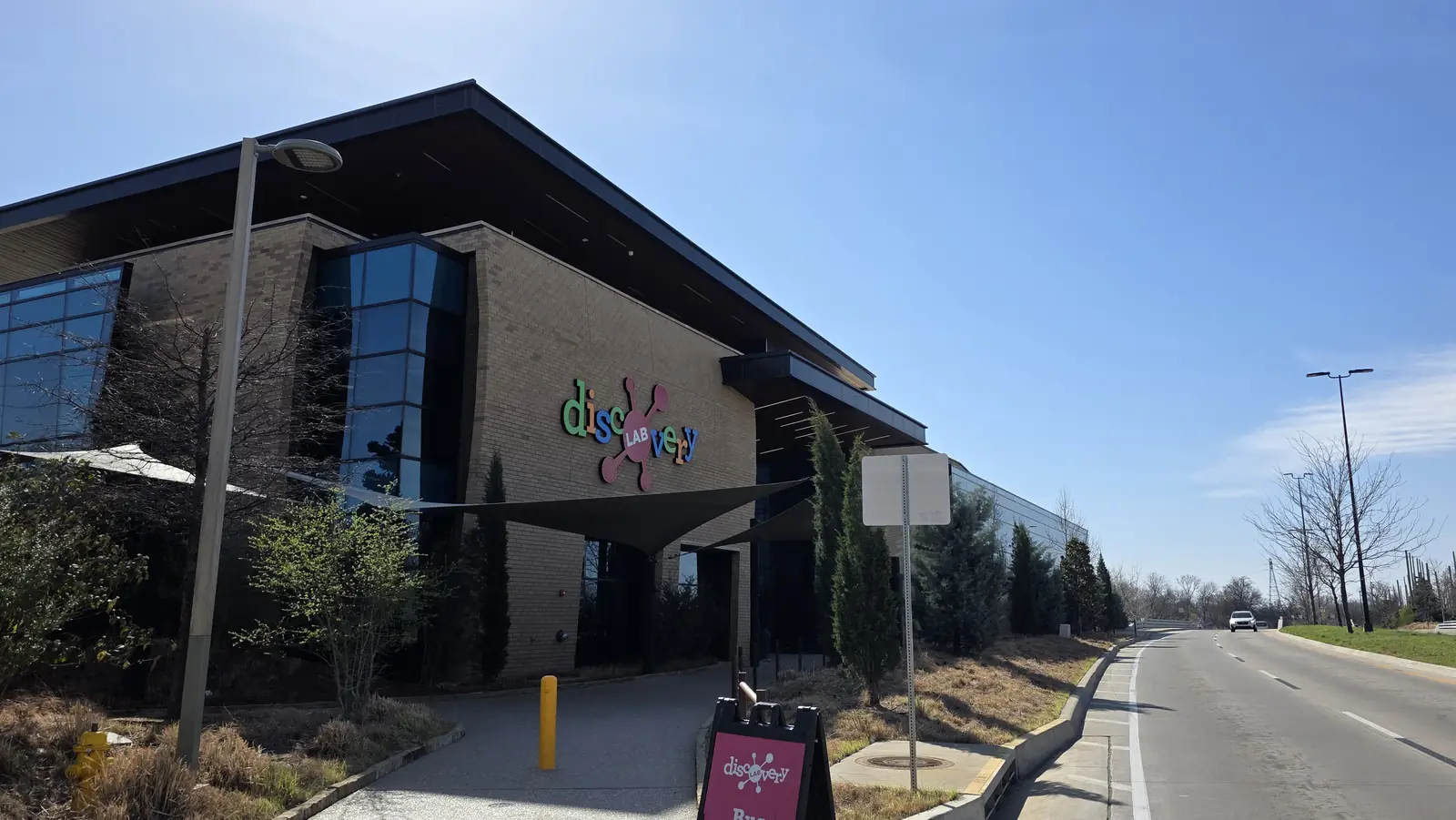
Photo Guide: Discovery Lab Main Entrance
The 31st Street side of Discovery Lab helps keep this outing compact on weather-shift or nap-sensitive days. It is a straightforward indoor arrival, which is part of why this stop pairs so well with a shorter Gathering Place block or a simple lunch-reset plan.
Discovery lab with toddlers: stroller, parking, snack, bathroom, sensory strategy#
- Stroller strategy: Bring the stroller for arrival and transitions, then park near Little Lab when your toddler wants to roam. Discovery Lab states ramps and elevators are available in the exhibit hall, and stroller parking is next to Little Lab.
- Parking strategy: Start with the east-side guest lot off 31st Street. Use additional gravel parking south of the building off Riverside Drive if needed.
- Snack strategy: Food is not allowed in exhibit halls. Discovery Lab says families can eat in the outdoor amphitheater when no event is scheduled, and Elote Cafe offers kid-friendly options.
- Bathroom strategy: Do the first diaper change/restroom stop right after arrival, then ask the front desk for the nearest restroom before you need a fast run.
- Sensory strategy: Start in Little Lab, then move one zone at a time into higher-stimulation spaces (tape tunnels, music, fog/projection areas). Discovery Lab also shares a social story and offers recurring second-Sunday sensory-friendly morning hours with lower light/sound levels.
- Timing strategy: Opening-to-lunch and post-nap short visits are usually easiest for nap-sensitive families. Discovery Lab also notes Monday 11:00 a.m. Little Lab programming for guests 4 and younger; check day-of details because schedules can shift.
Sample 2-3 hour route#
- 0:00-0:20 Arrival, restroom/diaper reset, settle into Little Lab.
- 0:20-0:50 Tape tunnels (Anne Zarrow Central Gallery).
- 0:50-1:20 HydroLab.
- 1:20-1:45 Snack + stroller reset.
- 1:45-2:15 Math and Music.
- 2:15-3:00 Optional final stop (Ballapalooza or Imaginarium) only if your toddler still has margin.
- Optional split day Leave for nap/lunch and re-enter the same day with a stamp or receipt.
Pairing with Gathering Place#
Discovery Lab and Gathering Place are next to each other, so this can be a practical same-day pair. The toddler-friendly version is to anchor around one stop and keep the second stop short.
- Cool weather: outdoor movement first, museum second.
- Hot, windy, or rainy weather: museum first, park second as a bonus.
- If Discovery Lab is your anchor, start with its 31st Street lot.
- If the park is your anchor, Gathering Place says its main lot is along John Williams Way, with additional parking along Riverside and in the gravel lot at 33rd Place and Riverside.
Helpful related planning links:
FAQ#
Is discovery lab with toddlers worth it for ages 2 to 4?#
For many families, yes. The strongest fit is usually mobile toddlers who enjoy touching, climbing, building, and repeatable cause-and-effect play.
Is Discovery Lab good for 2-year-olds?#
Usually yes. A Little Lab-first route with short bursts in tunnels, water play, and music tends to work best.
Can I bring a stroller to Discovery Lab?#
Yes. Discovery Lab says ramps and elevators are available in the exhibit hall, and stroller parking is next to Little Lab.
How long should we plan for a toddler visit?#
A practical planning range is about 2 to 4 hours, with many families preferring a focused 2 to 3 hour route around naps and meals.
What should we know about tickets, food, and re-entry?#
Based on current source guidance, admission and young-child policies can change, so verify the ticket page before you go. Food is not allowed in exhibit halls, and same-day re-entry is allowed with a stamp or receipt.
Next Steps#
- Build a broader itinerary with things to do in Tulsa with toddlers.
- Add a full overnight framework with weekend in Tulsa with kids.
- Ready to lock your home base? Book direct.